
Cake Finishes and Surface Textures
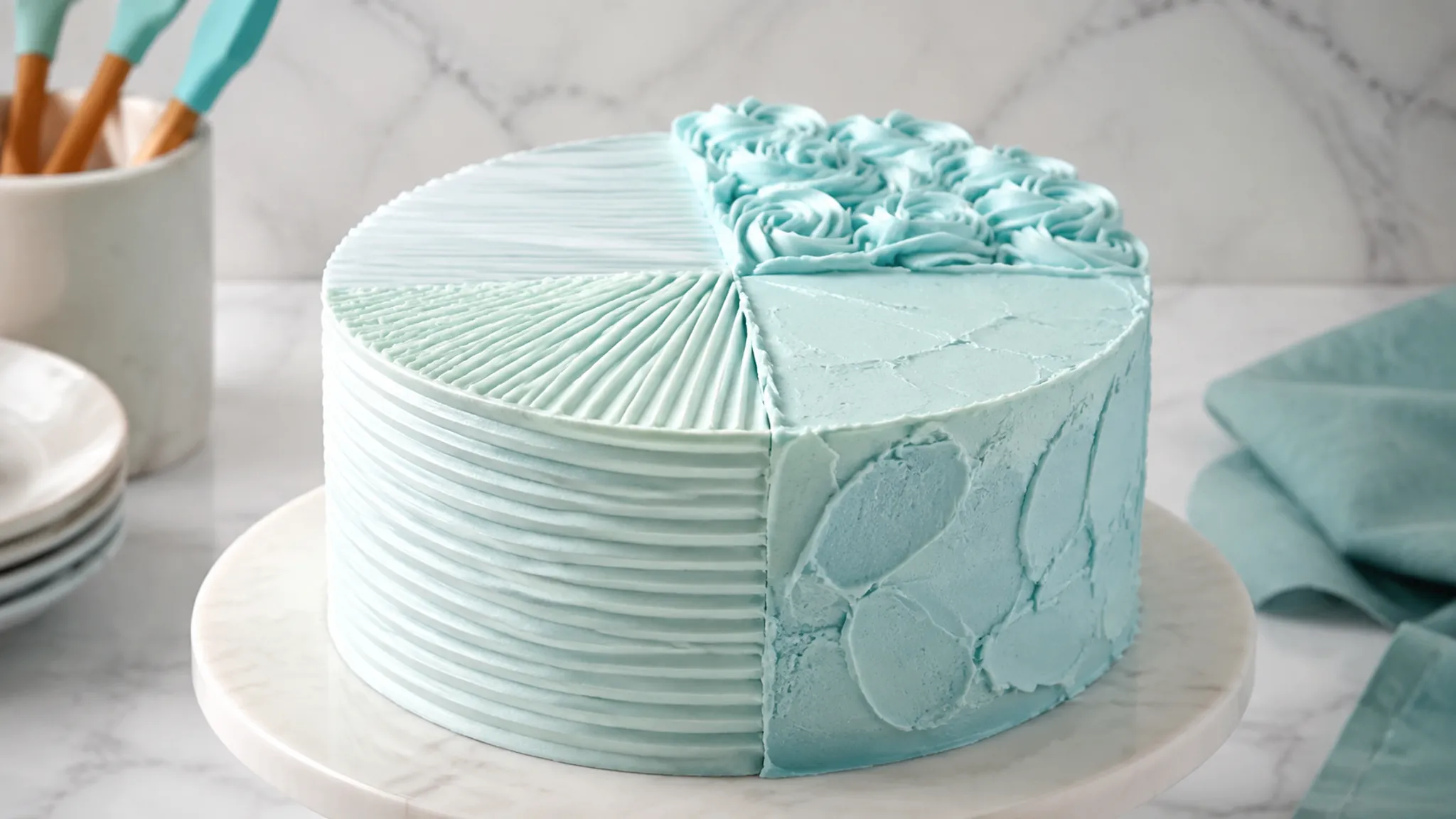
Choosing between smooth, ridged, combed, piped, and scraped cake finishes changes more than the surface. It affects how the silhouette reads, where the eye rests, and which details need a clearer bakery handoff.
The useful comparison is not simply smooth versus textured. Look at edge shape, pattern direction, spacing, scale, coverage, and the relationship between texture and focal decoration. A reference can show those visible choices, but it cannot establish the ingredients, internal texture, storage plan, transport requirements, price, or final feasibility.
More specific pages
These pages continue the topic in smaller, more specific directions.
What Counts as a Cake Finish?
A cake finish is the visible treatment applied to the outer surface. Surface texture is one part of that finish; color, sheen, edge definition, pattern direction, and decorative placement also change the result.
Two cakes may share a color while reading differently because one has a flat surface and the other has visible grooves. Textured cakes can also differ mainly through spacing, scale, or how carefully the pattern stops at an edge.
Describe a reference through details that can be seen:
- Surface: smooth, softly uneven, ridged, combed, piped, scraped, or visibly layered
- Edge: sharp, rounded, irregular, scalloped, or visually softened
- Direction: vertical, horizontal, diagonal, circular, radial, or mixed
- Density: sparse, closely repeated, clustered, or concentrated in one area
- Scale: fine lines, medium bands, broad sweeps, or large raised details
- Placement: full coverage, one tier, an upper edge, a side panel, or a focal area
- Contrast: same-color texture, contrasting color, contrasting sheen, or added decoration
Finish names vary between bakeries. A brief is clearer when it describes what the reference shows instead of relying on one label alone.
Main Cake Finish Options
Smooth Finishes
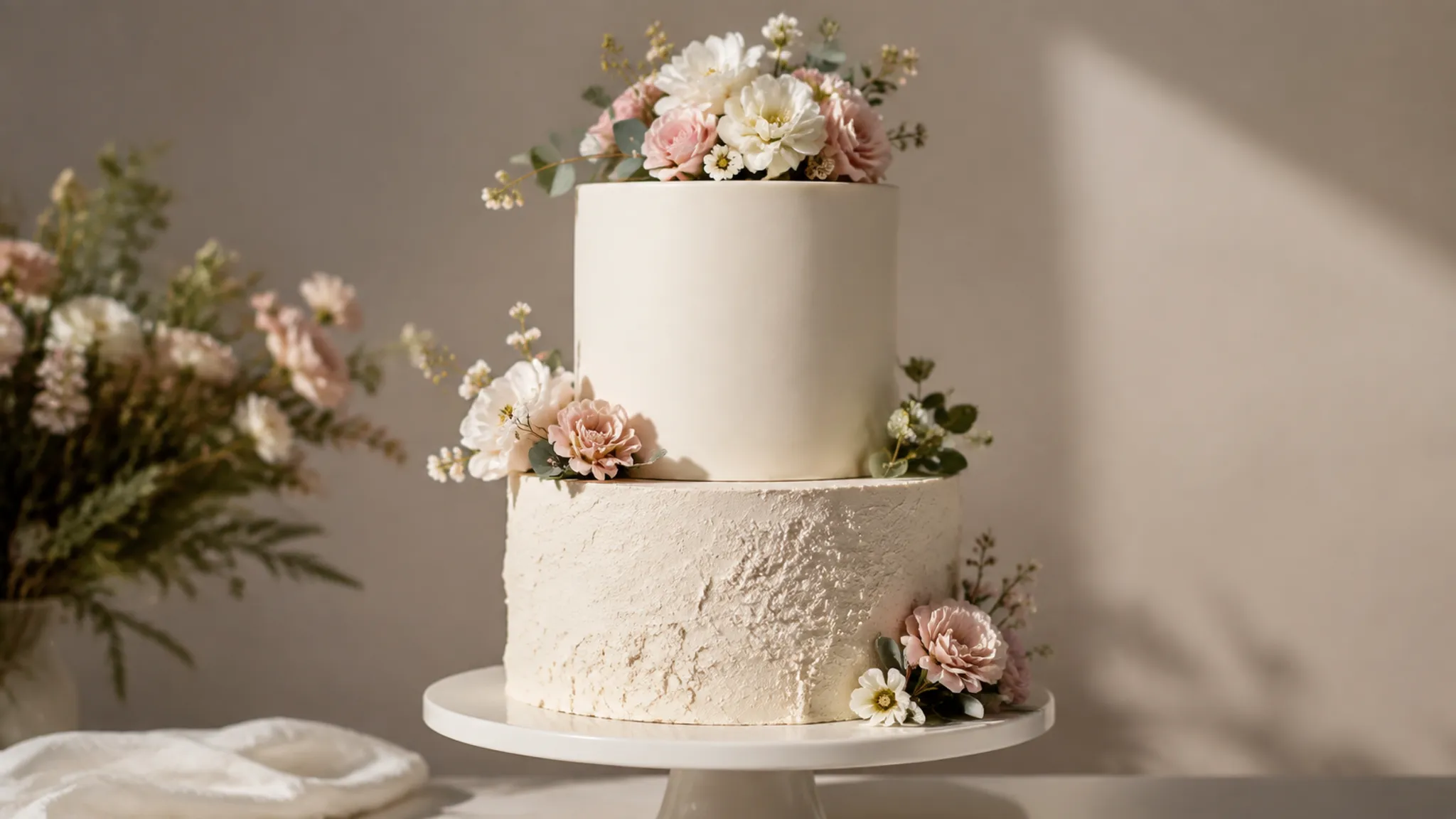
A smooth finish gives the profile, tier ratio, color, and added decoration more visual responsibility. Small changes in the top edge or surface sheen can therefore matter more than they would on a heavily textured cake.
When comparing smooth references, inspect the top edge, the relationship between the side wall and top surface, the consistency of the coating, and the contrast between the surface and nearby flowers, piping, toppers, or lettering.
The image does not establish which coating was used or how uniform the finished surface will be. Ask the producing bakery to confirm the intended finish material, edge treatment, and acceptable degree of variation.
Ridged Cake Finishes
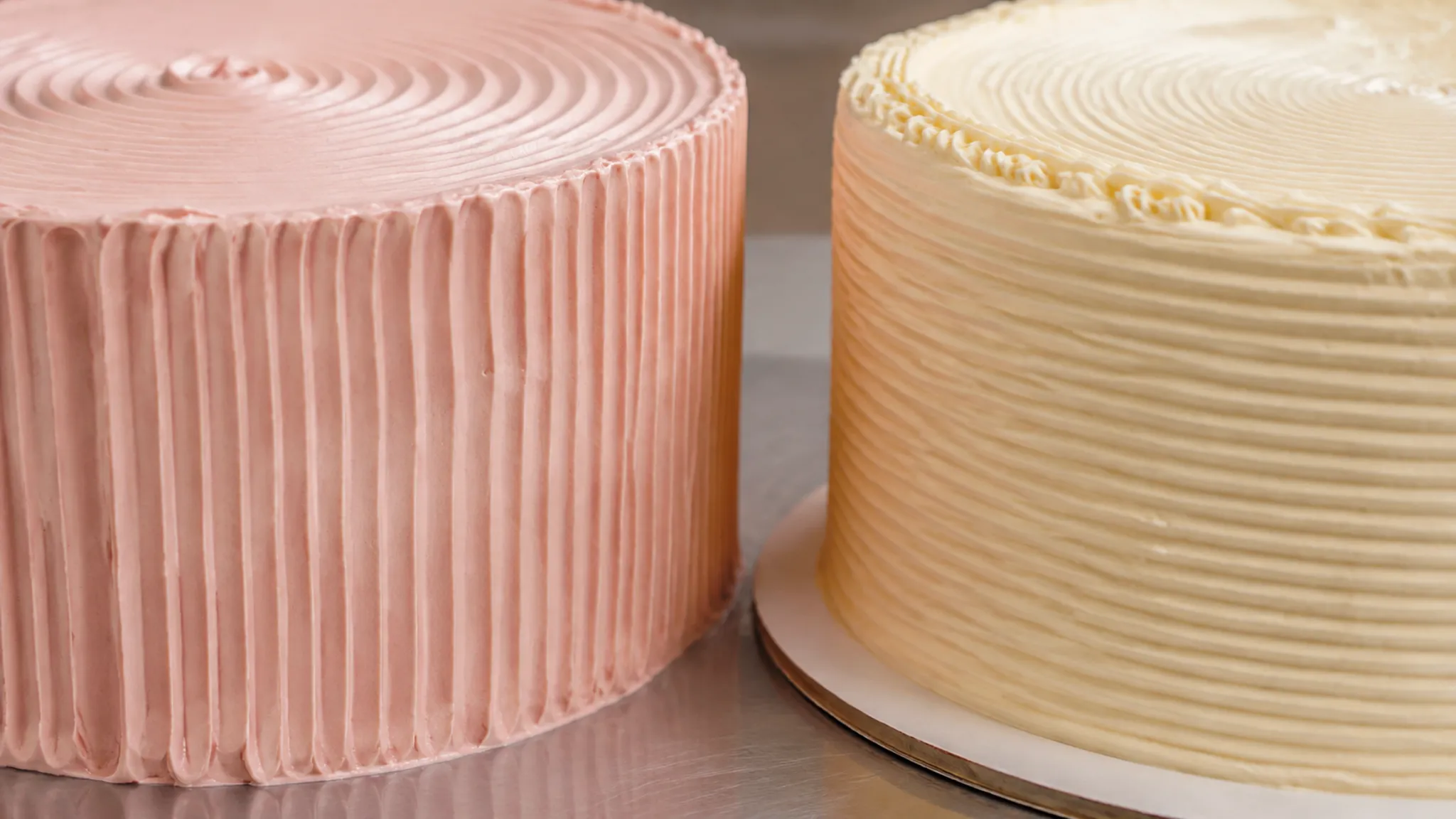
Ridged cake finishes use repeated raised or recessed lines as the visible pattern. Direction, spacing, apparent depth, and the point where the ridges stop usually carry more design weight than the category name.
Vertical ridges can emphasize height. Horizontal ridges reinforce bands around a tier. Circular or radial movement shifts attention toward the top surface or a central detail.
| Criterion | Fine repeated ridges | Broad spaced ridges |
|---|---|---|
| Surface rhythm | Continuous and regular | Open and graphic |
| Scale | Supports small repeated details | Needs enough surface area to remain legible |
| Focal detail | Can sit behind simple decoration | May compete with dense decoration |
| Open question | How consistent should the spacing be? | How should the pattern end at the edge? |
A photographed cake shows the visible ridge pattern, not the exact tool, coating, pressure, or number of passes used. Include a close surface crop in the brief and identify whether direction, density, or the stopping point matters most.
Combed Cake Finishes
Combed finishes usually appear as repeated grooves or dragged lines. The useful comparison is how the pattern behaves across the tier: whether the grooves are straight or gently irregular, whether they wrap around the side, and whether the top edge remains controlled.
Fine combed lines create a denser surface. Broad grooves leave more coating visible between each line. Texture can also remain on one feature tier while another tier stays smoother, creating a clear visual hierarchy.
The reference does not establish how the grooves will appear after the bakery’s chosen handling and display process. Ask which areas should remain free of pattern for lettering, flowers, or borders, and what degree of consistency is intended.
Piped Cake Finishes
Piped finishes use applied lines, shells, dots, swirls, or other raised marks. They usually read as added material, while a combed or scraped surface reads more as shaped coating.
Record line thickness, repetition, spacing, direction, overlap, coverage, and the relationship between piping and borders. Dense piping can become the focal detail even when the color is restrained. Sparse piping leaves more of the underlying surface visible and may support a larger central decoration.
A small image can merge separate lines into one band or make shallow texture appear deeper. Send both the full reference and a close-up, then state which characteristic has priority: line width, spacing, direction, or overall density.
Scraped Cake Finishes
Scraped finishes often show broad movement across the coating. The surface may appear softly uneven, layered, or marked by directional strokes.
Use concrete wording in the brief:
- Broad vertical marks
- Uneven bands around the lower tier
- A lightly irregular edge
- A mostly smooth surface with one scraped panel
- Visible variation in line width
Terms such as rustic or modern can conceal different decisions about edge shape, pattern scale, and coverage. State whether the irregularity should be deliberately matched or treated only as a general surface direction.
Compare Cake Finishes by the Decision They Change
Use the same criteria for every option. A smooth reference should not be judged only by uniformity while a textured reference is judged only by pattern interest.
Profile and Tier Ratio
Surface texture works beside the silhouette. Fine vertical lines may draw attention to a tall profile, while broad horizontal bands can emphasize the width of a tier.
Compare overall height, relative tier widths, spacing between tiers, edge visibility, and whether the texture reinforces or interrupts the profile. Perspective and cropping can distort proportions, so treat the image as a starting reference rather than a dimensional specification.
Edge Shape
The edge often separates otherwise similar cake finishes. A sharp edge supports a controlled, graphic reading. A rounded or irregular edge makes the surface treatment more prominent.
State the requirement directly: clean and level, softly rounded, uneven but intentional, scalloped, textured at the top border, or plain beside a focal detail. Add an edge crop because a full-cake photograph may not show this distinction.
Groove Direction
Direction changes the visual movement of the cake. Vertical patterns draw the eye up and down, horizontal patterns create bands, and circular or radial patterns organize attention around the top surface.
Decide whether the direction continues across every tier, alternates between tiers, remains on one feature tier, changes on the top surface, stops below the upper edge, or follows a separate decorative element. A change in direction should appear in the brief as an intentional choice.
Spacing and Scale
Spacing determines whether a finish reads as fine texture or a larger graphic pattern. Scale should be compared with the cake size and nearby decoration.
Fine patterns may disappear in a distant photograph. Large patterns may overpower small lettering or delicate flowers. Use a reference board with one full-cake image, one surface crop, one edge crop, and a note identifying the approximate line scale and highest-priority detail.
That description supports comparison. It becomes a production specification only after the bakery confirms what can be made on the planned cake.
Placement
Texture does not need to cover every visible surface. Full coverage, one textured tier, a textured panel, or a patterned area behind lettering each creates a different hierarchy.
A dense pattern behind a small focal detail may reduce legibility. A plain area can give flowers, a topper, or a monogram more visual space. Mark the intended coverage rather than assuming that the reference applies the same finish everywhere.
Where Surface Texture Is Commonly Misread
Decorative Texture Versus Eating Texture
A visible outer surface is not the same as the texture of the crumb or filling. Bakery research may examine food texture through instrumental measurement or sensory assessment, while a photograph provides visual information only.
A ridged outer finish does not establish whether the cake is soft, firm, moist, cohesive, or crisp. Those properties depend on the cake, filling, coating, ingredients, and production conditions.
A Finish Name Versus a Finish Description
Terms such as ridged, combed, piped, and scraped can overlap in ordinary use. One bakery may use a named category, while another describes the same result through line direction or surface pattern.
Vertical, closely spaced grooves on the side of the lower tier, with a mostly controlled top edge and no texture behind the lettering.
This kind of wording gives the producer observable information without assuming a particular method.
A Reference Image Versus a Confirmed Order
A finished photograph may document one cake. An illustrative image or generated preview may show only a proposed direction. Neither confirms that the same result can be produced on another cake.
- Photographed finished cake: shows an existing visual result
- Documented method example: explains a process when the source is directly relevant
- Illustrative reference: communicates shape, pattern, or mood
- Generated or non-final preview: suggests a direction and may contain visual inaccuracies
The closer a brief comes to production, the more clearly it should separate visible preference from confirmed specification.
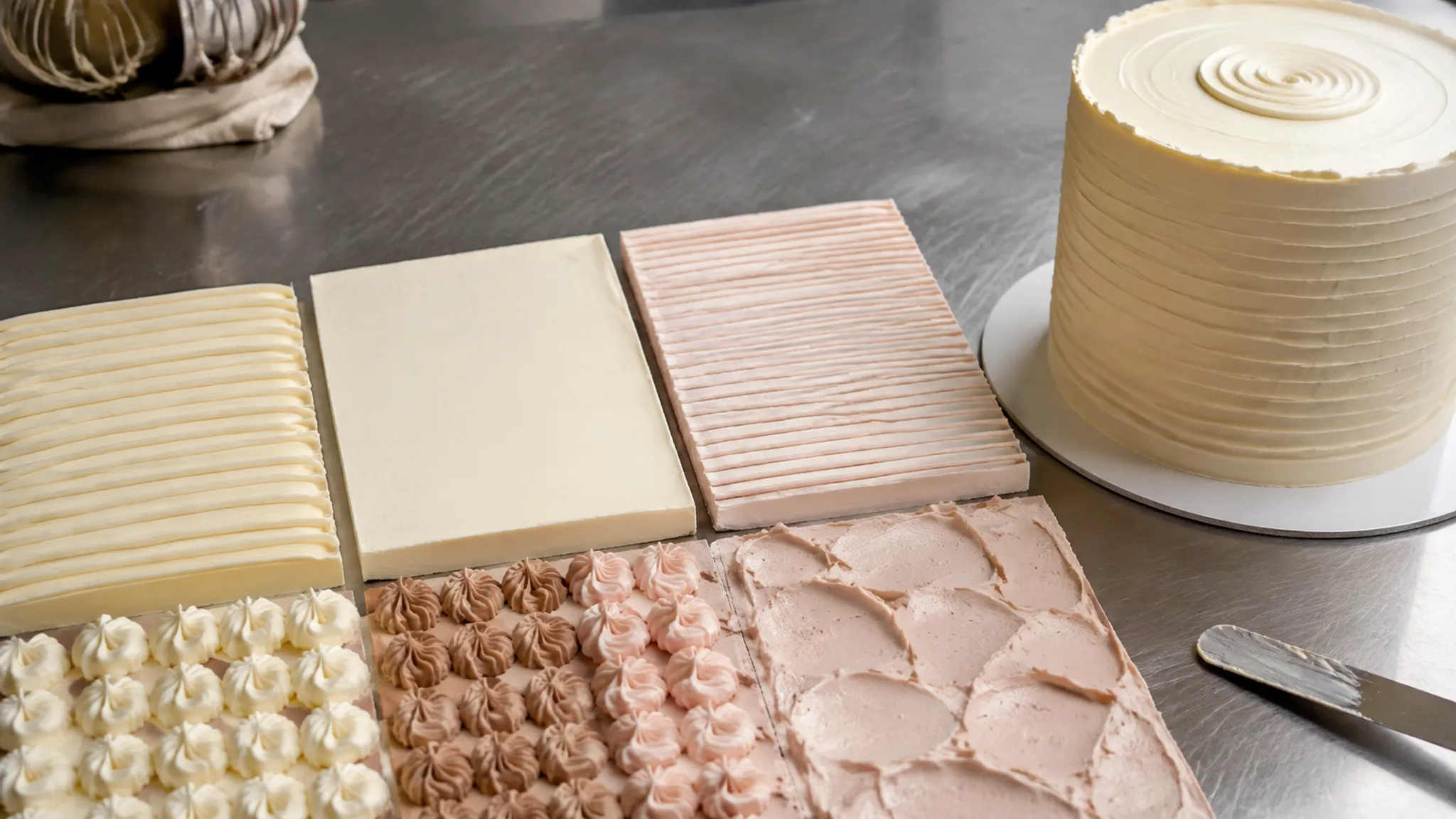
A Practical Comparison Grid
Use one row for each finish option and keep the questions consistent.
| Finish option | Surface pattern | Edge shape | Direction | Density | Focal area | Needs confirmation |
|---|---|---|---|---|---|---|
| Smooth | Minimal visible variation | Sharp, rounded, or soft | Not applicable | Low | Color, silhouette, or lettering | Coating and edge treatment |
| Ridged | Repeated raised or recessed lines | Controlled or interrupted | Vertical, horizontal, or circular | Fine to broad | Simple decoration or open surface | Spacing, apparent depth, and stopping point |
| Combed | Repeated grooves or dragged lines | Part of the pattern or separately controlled | Usually directional | Fine to broad | Textured side wall or feature tier | Groove consistency and surface response |
| Piped | Applied repeated lines or marks | Defined by the piping pattern | Linear, wrapped, or clustered | Sparse to dense | Borders, panels, or a full tier | Line size, material, and placement |
| Scraped | Broad or narrow surface movement | Controlled or softly irregular | Often directional | Open or layered | Surface-led decoration | Intended degree of irregularity |
This grid supports visual comparison. It does not replace the bakery’s production specification.
Bakery Finish Questions to Resolve
A strong handoff separates decided preferences from details that still need producer confirmation. Ask:
- Which finish description best matches the requested surface?
- Should the pattern read as fine, medium, or broad at the intended viewing distance?
- Which outer coating is being considered for the planned cake?
- How should the top and lower edges be treated?
- Should the texture cover every tier or selected areas only?
- How consistent should the spacing and line direction be?
- Where should the pattern stop around lettering, flowers, or toppers?
- Does the chosen finish change the planned decoration placement?
- Are there storage, handling, food-contact, or venue requirements that affect the available finish?
- Which details are settled by the reference, and which require a separate production decision?
- Does the planned profile leave enough surface area for the chosen pattern scale?
- What revision would preserve the priority if the reference cannot be reproduced as shown?
The answers may redirect the choice. That is useful information for the brief.
Turning a Preference into a Bakery Handoff
A workable handoff can be short when it separates visible priorities from technical questions.
- Finish direction: Textured rather than fully smooth.
- Preferred path: Vertical ridged or combed surface on the lower tier.
- Pattern: Fine to medium spacing, visible from a normal viewing distance.
- Edge: Controlled top edge without a heavy textured border.
- Placement: Keep the upper tier mostly smooth for the main decoration.
- Contrast: Keep the surface and coating in the same color unless the bakery recommends another treatment.
- Reference priority: Match direction, spacing, and coverage before minor irregularities.
- Confirmation needed: Coating choice, achievable definition, edge treatment, handling requirements, and interaction with the topper.
This format gives the bakery a usable visual brief while leaving method-specific decisions to the people responsible for production.
How to Judge a Finish Preview
Review the preview at three scales so that a strong full-cake impression does not hide a weak surface reference.
Full View
Check the silhouette, tier ratio, overall balance, and whether the texture supports the focal detail.
Middle Distance
Check whether the pattern remains visible without dominating the cake. Look for uneven density, abrupt stopping points, or a mismatch between tiers.
Close View
Check line spacing, edge treatment, surface variation, and the difference between actual texture and image artifacts.
A preview can communicate direction while leaving production details unresolved. Treat it as a comparison tool until the producing bakery confirms the material, finish method, proportions, and handling plan.
Final Checklist for Comparing Cake Finishes
Before sending a reference to a bakery, mark:
- The preferred surface category
- The pattern direction
- The edge shape
- The spacing and scale
- The coverage and placement
- The relationship to lettering, flowers, and toppers
- The highest-priority visual detail
- The details that remain open
- The handling, storage, venue, or food-contact questions requiring producer confirmation
The strongest finish brief does not depend on a single label. It describes the visible surface, compares realistic alternatives, and leaves technical decisions with the bakery responsible for production.
Sources
- Textural Properties of Bakery Products: A Review of Instrumental and Sensory Evaluation Studies Used for the boundary between visible decoration and texture properties assessed through instrumental or sensory methods.
- Measurement of Contour and Volume Changes During Cake Baking Used for the distinction between photographed proportions and separately confirmed cake profile or dimensions.
- Bakery Products Science and Technology, Second Edition Used as adjacent technical context for bakery product properties; it does not serve as direct documentation of decorative cake finish methods.