
Cake Feasibility and Production Questions
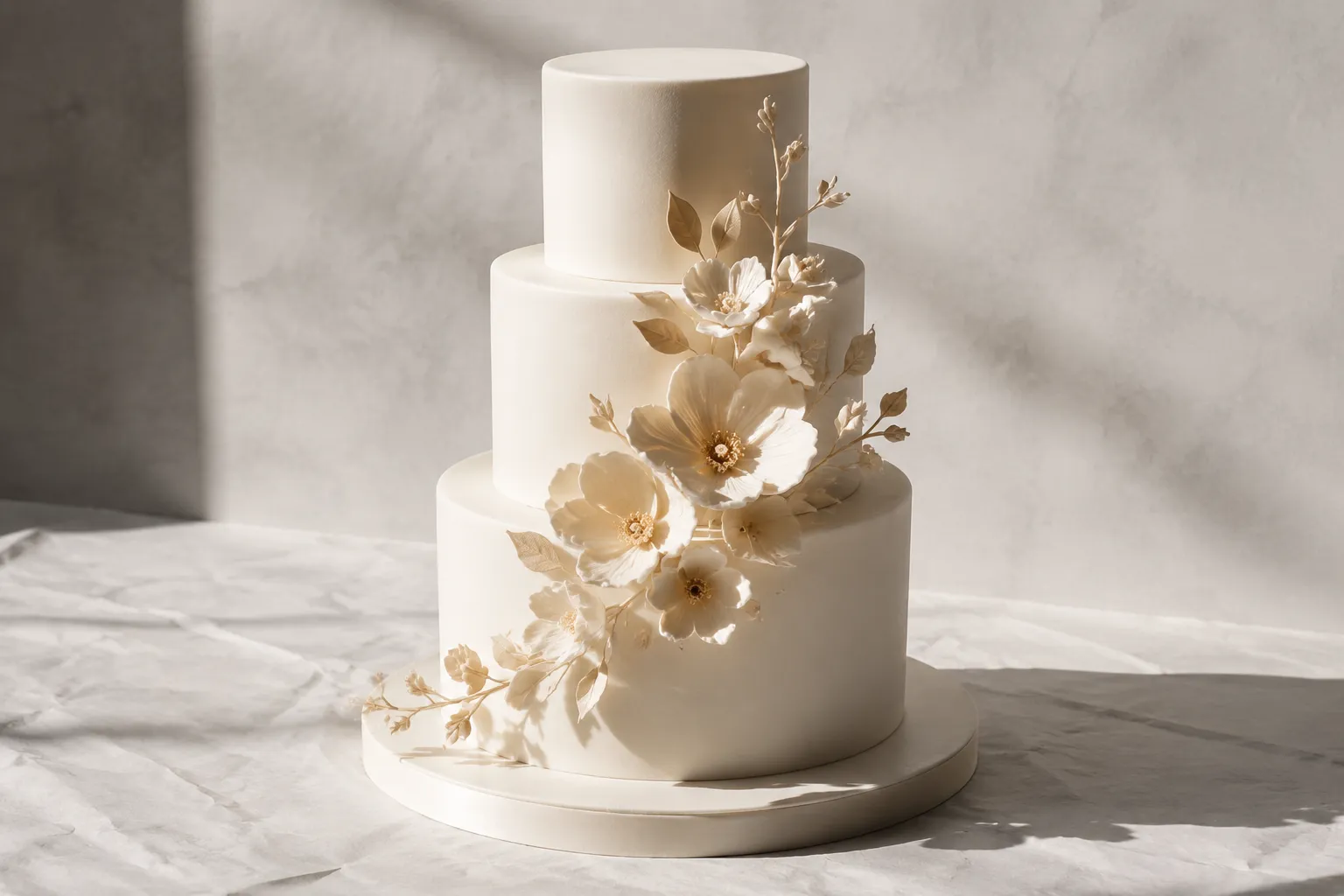
A cake reference can communicate a silhouette, finish, color impression, or decorative mood. It cannot confirm the portions, ingredients, internal support, price, availability, transport plan, or venue requirements.
A useful cake planning checklist turns those differences into a practical handoff. It records what the reference shows, identifies the constraint most likely to change the design, and leaves order-specific decisions for the producing bakery and venue to confirm.
What a Cake Planning Checklist Should Clarify
Start with the information that gives the bakery a workable brief. These categories are planning prompts rather than universal bakery rules.
- Event date and preferred serving time
- Estimated guest count and serving convention
- Venue, delivery access, storage, and setup conditions
- Cake shape, dimensions, tier count, and approximate height
- Flavor, filling, and dietary requirements
- Reference images and the design details that matter most
- Budget range, payment terms, and design scope
- Decorative materials and food-contact questions
- Required lead time and design approval deadline
- Backup options for unavailable colors, flowers, toppers, or specialty materials
The brief should also identify priorities. A client may care most about the photographed profile, the guest count, the budget, the flavor, or the event schedule. Those priorities can conflict when a design needs to serve more or fewer people than the reference suggests.
When the original form cannot be followed exactly, a clear priority gives the producing bakery a decision rule. For example, the brief might preserve the focal detail while simplifying the background finish, or protect the guest count while allowing the tier ratio to change.
Describe What the Reference Actually Shows
Begin with observation before interpretation. A reference may show:
- A round, square, sheet, sculpted, or tiered profile
- A narrow or broad tier ratio
- Straight, rounded, sharp, or irregular edges
- A smooth icing, textured finish, fondant surface, piping, edible image, or layered decoration
- Dense or open spacing between details
- A dominant color impression and its contrast with surrounding elements
- A focal detail such as a topper, flower grouping, figure, lettering, or edible image
- A particular scale relationship between tiers and decorations
- A display arrangement involving stands, separators, or surrounding desserts
Concrete language gives the bakery more useful production information than a broad phrase such as “clean and modern.” A stronger description might specify two tiers with straight edges, a smooth pale finish, sparse piping, and one centered topper.
The image does not establish the recipe, filling, allergens, support system, labor, final dimensions, delivery requirements, venue acceptance, or exact serving count. It shows one visual result under conditions that may not match the planned event.
Identify the type of reference as well:
| Reference type | What it can communicate | What remains open |
|---|---|---|
| Photographed finished cake | Visible profile, finish, placement, color relationships, and scale within the image | Recipe, ingredients, construction, portions, price, and whether the same arrangement suits the new event |
| Sketch or collage | Overall direction, selected details, and possible relationships between elements | Actual texture, dimensions, materials, assembly, and production complexity |
| Generated or non-final preview | A discussion aid for silhouette, color, focal detail, and layout | Production accuracy, exact materials, structure, dimensions, and final appearance |
Labeling a preview accurately prevents visual alignment from being mistaken for a confirmed production result.
Choose a Planning Order
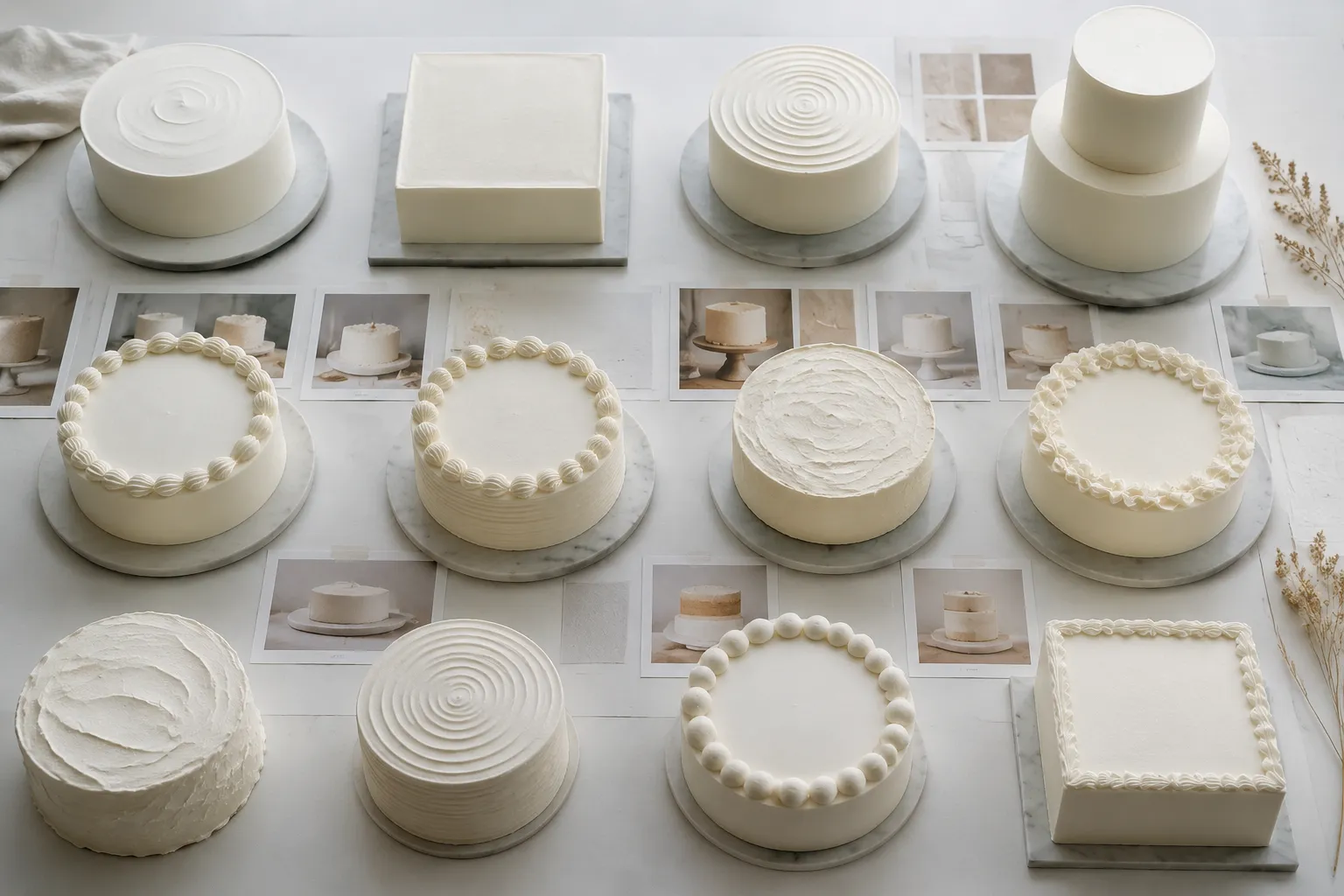
There is no single sequence for every cake brief. The useful choice depends on which constraint is already fixed.
| Starting point | Useful when | Question to carry forward |
|---|---|---|
| Design-first | The silhouette, finish, theme, or reference image is the main reason for the order | Can this visual direction be adapted to the required portions, budget, schedule, and venue? |
| Serving-first | The guest count or dessert quantity is firm | Which profile, tier ratio, separate cake, or decorative adjustment can provide the required plan? |
| Constraint-first | Budget, dietary requirements, venue access, or event timing has little flexibility | Which visual features can remain recognizable after the fixed constraint is applied? |
A practical brief can state the priority directly:
- “The guest count is fixed; preserve the color direction and focal detail.”
- “The silhouette is the priority; confirm whether additional portions require a separate cake.”
- “The budget is fixed; identify which details can be simplified.”
- “The venue schedule is fixed; confirm whether the cake can arrive assembled.”
- “The dietary requirement is fixed; confirm the available recipe and handling process before choosing the decoration.”
This wording keeps the brief useful when the original reference cannot be reproduced in the same format.
Key Planning Criteria
The following criteria form the main territory of a cake planning checklist. They are connected, but each can change the design in a different way.
Serving, Shape, and Tier Ratio
Cake serving and portion planning depend on more than a visible diameter. Shape, dimensions, height, number of tiers, recipe, filling, cutting convention, event context, and other desserts can all affect the plan.
Serving charts can illustrate how formats and dimensions are commonly separated, but a chart is not an exact yield for every bakery or event. The producing bakery should confirm the format, dimensions, portion assumption, and intended cutting method.
Record:
- Guest count and whether it is a minimum, target, or reserve
- Serving convention and whether other desserts are included
- Shape, dimensions, height, and number of tiers
- Approximate width of each tier and the overall tier ratio
- Whether the top tier is intended for serving or display
- Whether a kitchen cake or separate sheet cake is being considered
- Who will handle cutting and whether the venue has a preferred method
A round, square, sheet, or sculpted cake may communicate different proportions even when the intended portion quantity is similar. A narrow top tier may strengthen the profile while contributing fewer portions. A broader lower tier may meet the serving target while changing the reference’s balance.
Budget and Design Scope
A budget conversation is more useful when it describes scope rather than only a total amount. Potentially significant elements include tier count, serving quantity, sculpted forms, hand-piped detail, edible images, sugar or fresh flowers, metallic finishes, custom toppers, multiple colors, intricate texture, individual decorative pieces, delivery, setup, and additional dessert-table items.
Terms such as “custom design,” “cost per serving,” and “standard lead time” can be useful prompts, but they do not describe a universal price or service level. Convert them into questions about the actual order.
- Which detail contributes most to the design’s identity?
- Can a hand-made feature become a simpler piped or placed detail?
- Can the focal decoration remain while the surrounding finish is simplified?
- Can the same color direction be produced with another material?
- Can another dessert provide part of the quantity?
- Could a separate display element preserve the profile without increasing the edible cake size?
State what should remain recognizable if the design is simplified. That might be the edge treatment, color placement, topper, flower grouping, or overall silhouette.
Structure, Support, and Assembly
A photograph cannot reveal how a tall, tiered, or sculptural cake is supported. The producing bakery may use boards, internal supports, separators, alternate bases, or partial assembly, but the suitable method depends on the design and the bakery’s process.
Use structure terms as questions rather than construction instructions:
- Does the design require internal support or a different base?
- How will the tiers be separated or stacked?
- Will boards, supports, or separators be visible?
- Are projections, figures, or toppers attached separately?
- Does the cake need to travel in more than one section?
- Who performs final assembly, and where?
- Which visible details may need to change for assembly or transport?
Tall tiers, large toppers, suspended elements, and sculpted forms deserve a separate feasibility review. The bakery may recommend a different tier ratio, a lighter decoration, separated components, or venue assembly. A successful photograph does not prove stability under the planned conditions.
Ingredients, Allergens, and Edible Materials
Ingredient and allergen questions belong in the initial brief when the order includes dietary restrictions, particular fillings, colored finishes, edible images, flowers, or specialty decorations.
- Cake and filling ingredients
- Major allergens relevant to the order
- Ingredient information or labeling available for the finished product
- Shared equipment or handling that affects the bakery’s answer
- Materials used for edible images, colors, coatings, or metallic finishes
- Whether a substitute ingredient changes texture, color, or design
- Any additional venue requirements for ingredient information
Food-allergy and allergen-labeling guidance can help define the questions to ask, but it does not certify an individual bakery’s handling or make a custom cake suitable for every dietary situation. Jurisdiction-specific food-law guidance may also affect ingredient information, labeling, packaging, or handling. The applicable bakery and local requirements determine the final process.
Food-Contact Decorations
Not every visible cake decoration is edible. Separate the brief into edible decorations, removable non-edible decorations, items that touch or enter the cake, and items placed beside the cake.
| Decoration or material | Planning question |
|---|---|
| Fresh or sugar flowers | What is the material, and how is it placed, isolated, removed, and documented? |
| Wires, picks, and supports | Do they enter or touch the cake, and who removes them before serving? |
| Ribbons, paints, and metallic finishes | Are they intended for food contact, or are they separated from the edible surface? |
| Toppers and figurines | Are they edible, removable, attached separately, or subject to venue rules? |
| Stands and separators | Are they part of the cake, part of the display, or supplied by another party? |
Ask whether a non-edible item needs a barrier or removable support, who handles removal, whether small parts affect serving arrangements, and whether the venue permits the proposed material. Guidance about decorative products addresses a narrow material and food-contact question; it does not approve a specific bakery’s handling process.

Transport, Venue, Storage, and Timing
Transport planning begins with the route and cake format. A design that appears simple may require separate movement of tiers, toppers, flowers, stands, or other components.
- Delivery address, arrival window, and access route
- Loading area, entrance restrictions, stairs, lifts, and carrying distance
- Storage or refrigeration available at the venue
- Setup surface, workspace, and assembly location
- Venue contact and handover information
- Responsibility for final placement and decoration removal
- Whether the cake arrives assembled or in sections
- Required design approval, payment, flavor, and portion deadlines
- What happens if a requested material becomes unavailable
Storage and setup instructions depend on the actual cake, decoration, venue, and schedule. General care advice should not replace order-specific instructions from the producing bakery. The venue should confirm its own access, storage, workspace, and decoration conditions.
Lead times also vary with design type, decorative density, components, route, access, and bakery capacity. A published example from one business describes that business’s workflow, not a general deadline for every order.
Availability and Substitution Planning
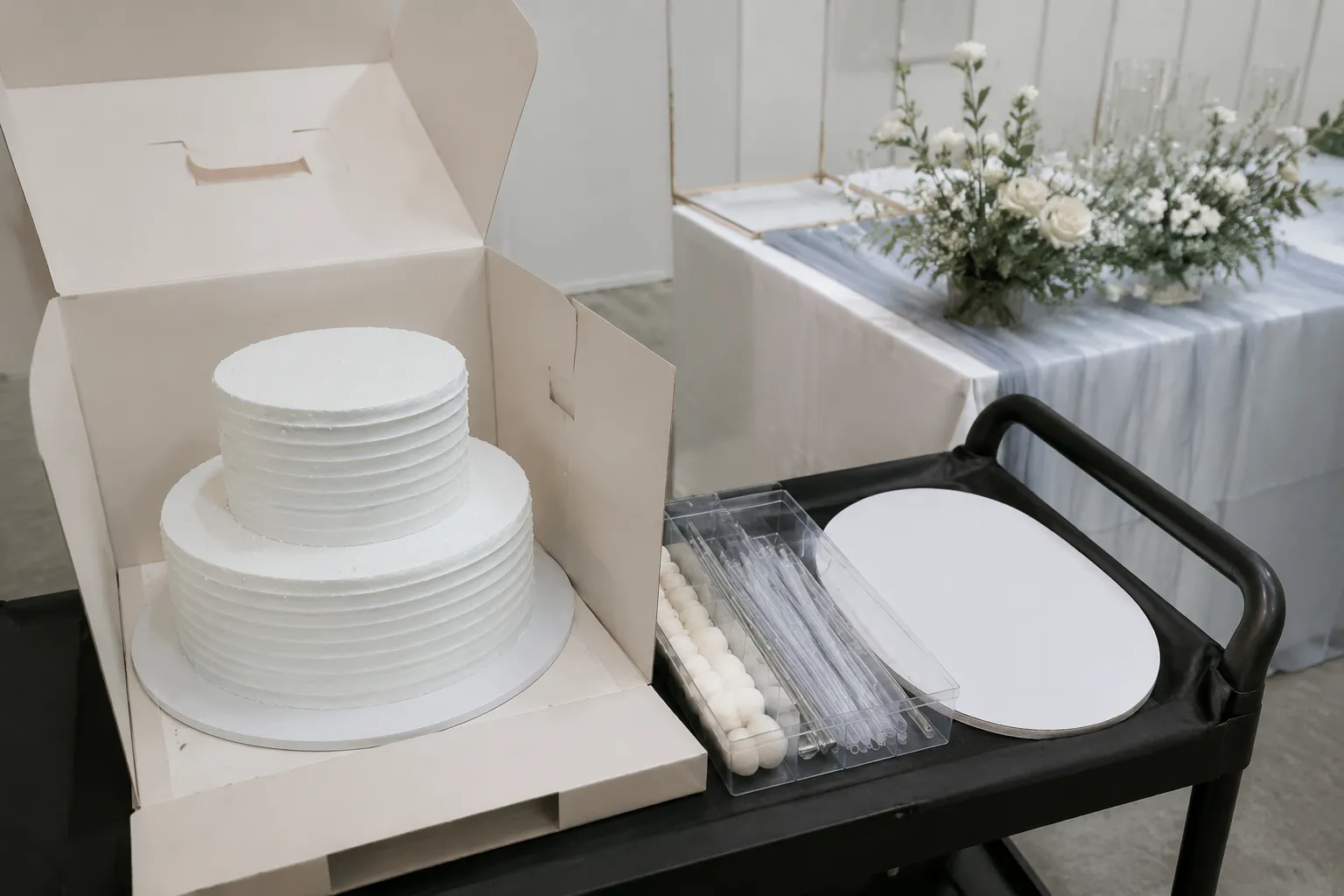
A production-ready brief includes a fallback path when the design depends on seasonal flowers, a particular topper, a specialty pigment, custom packaging, or another limited material.
| Feature | Preferred option | Acceptable change | Priority to preserve |
|---|---|---|---|
| Floral detail | Named flower or arrangement | Similar grouping, scale, or color family | Placement, contrast, or overall density |
| Color | Reference shade | Agreed color range or contrast | Color relationship rather than an exact photographed match |
| Topper | Specific form or material | Comparable size or position | Central focal role |
| Finish | Specific texture or coating | Simpler finish with related visual weight | Profile, edge, or main surface impression |
Lighting, screen settings, photography, and available materials can affect color. Describe the intended color family, contrast, and priority, then ask what variation is realistic for the order.
Turn the Reference Into a Bakery Brief
A concise brief can separate preferences from decisions that require confirmation.
| Brief area | Information to include |
|---|---|
| Event | Date, serving time, venue, guest count, other desserts, delivery access, and storage |
| Cake requirements | Shape, approximate dimensions, tier plan, serving target, flavor, filling, and dietary requirements |
| Design direction | Reference images, silhouette, profile, finish, edge shape, color impression, piping density, spacing, scale, and focal detail |
| Constraints | Budget, lead time, venue rules, assembly limits, delivery conditions, labeling questions, and non-edible decoration restrictions |
| Open decisions | Final portions, tier ratio, support, assembly location, setup timing, storage, substitutions, payment terms, and change deadline |
Keep the reference as a visual aid, then translate it into production-facing terms. “A similar cake” is less useful than a description of the profile, edge, finish, spacing, scale, and focal detail that should guide the discussion.
Compare Options Using the Same Criteria
When two cake directions are plausible, compare them against the same questions. The purpose is to expose tradeoffs, not to declare a universal winner.
| Criterion | Option A | Option B | Needs confirmation |
|---|---|---|---|
| Silhouette and profile | Which visual feature should remain if dimensions change? | ||
| Serving format | How do format and cutting assumptions affect portions? | ||
| Tier ratio and height | Does the requested proportion fit the serving plan? | ||
| Decorative density | Which details affect labor, materials, or lead time? | ||
| Focal detail | Can it remain if the surrounding finish is simplified? | ||
| Materials and food contact | Are materials edible, removable, isolated, or venue-approved? | ||
| Transport and setup | Will the cake travel assembled, in sections, or require venue assembly? | ||
| Budget sensitivity | What substitution preserves the main design identity? |
One option may preserve the reference’s profile more closely but require separate assembly. Another may provide a simpler delivery route while changing the spacing or tier proportions. The useful conclusion is the next question: which difference matters most for this event?
Review a Preview Before the Handoff
A preview is ready for discussion when it communicates the overall silhouette, relative tier sizes, approximate height, main color relationships, decorative placement, focal detail, spacing, and intended finish.
It should also identify whether it is a photograph, illustration, generated image, collage, or non-final concept. Mark unresolved details rather than allowing the image to imply certainty.
- Exact dimensions and portion yield
- Internal support and construction
- Ingredients, allergens, and recipe
- Food-contact treatment of decorations
- Final texture and material behavior
- Delivery configuration and setup requirements
- Final price, availability, and venue acceptance
The preview supports visual alignment. Confirmation from the producing bakery and venue establishes what can be produced and handled under the requested conditions.
Common Planning Mistakes
- Treating the image as a specification. Translate it into shape, finish, scale, spacing, materials, and focal detail before asking what can be adapted.
- Fixing the design before confirming portions. Decide whether the guest count, separate cake, or visual profile has priority.
- Assuming a restrained finish means a short schedule. Ask the bakery for its actual lead time rather than estimating from appearance.
- Reading market phrases as commitments. Clarify what “custom design,” “standard lead time,” or “professional delivery” includes for this order.
- Leaving materials unspecified. Flowers, wires, ribbons, picks, toppers, paints, and metallic elements may require separate handling questions.
- Leaving the venue out of the brief. Access, storage, assembly space, setup timing, and venue rules can change the practical option.
- Choosing one exact shade from a photograph. Describe the color family and contrast, then confirm the available range.
Final Confirmation List
- Date, serving time, and availability
- Guest count, serving convention, and other desserts
- Shape, dimensions, tier count, height, and tier ratio
- Flavor, filling, dietary requirements, and ingredient information
- Design scope, reference interpretation, and priority features
- Budget, payment terms, and change deadline
- Edible and non-edible decorations
- Food-contact questions and removal responsibilities
- Structure, support, assembly, and display base
- Transport format, delivery route, and handover
- Storage, venue access, setup surface, and setup timing
- Lead time and material substitution options
- Final responsibilities for the bakery, venue, and client
The checklist is complete when the client and producing bakery share the same understanding of the visual direction, the serving plan, the open constraints, and the questions still requiring confirmation.
Choose the Next Planning Route
Move to the route that addresses the unresolved decision most likely to change the design:
- Serving and portion planning: guest count, portion assumptions, tier yield, separate cakes, and cutting plans.
- Budget and design scope: labor-sensitive details, simplifications, serving needs, and quote questions.
- Structure and support: tall tiers, separators, toppers, projections, suspended elements, and sculptural forms.
- Ingredients and edible materials: fillings, colors, finishes, edible images, and dietary requirements.
- Food-contact decoration: flowers, wires, picks, ribbons, paints, metallic finishes, and removable items.
- Transport, setup, timing, and venue conditions: delivery routes, storage, assembly, access, and event timing.
- Decoration availability and substitutions: flowers, toppers, colors, packaging, stands, and specialty materials.
Describe the visual direction, record the unknowns, and bring focused questions to the producing bakery and venue before treating the preview as a final production plan.
Sources
- Frequently Asked Questions: Food Allergen Labeling Guidance for Industry, U.S. Food and Drug Administration.
- FDA Advises Home and Commercial Bakers to Avoid Use of Non-Edible Food Decorative Products, U.S. Food and Drug Administration.
- Ultimate Cake Serving Chart: Our Ultimate Guide to Perfect Portions, Wilton.
- Stacked Tiered Cake Construction, Wilton.
- Food Law Guidance Cakemakers, Orkney Islands Council.